

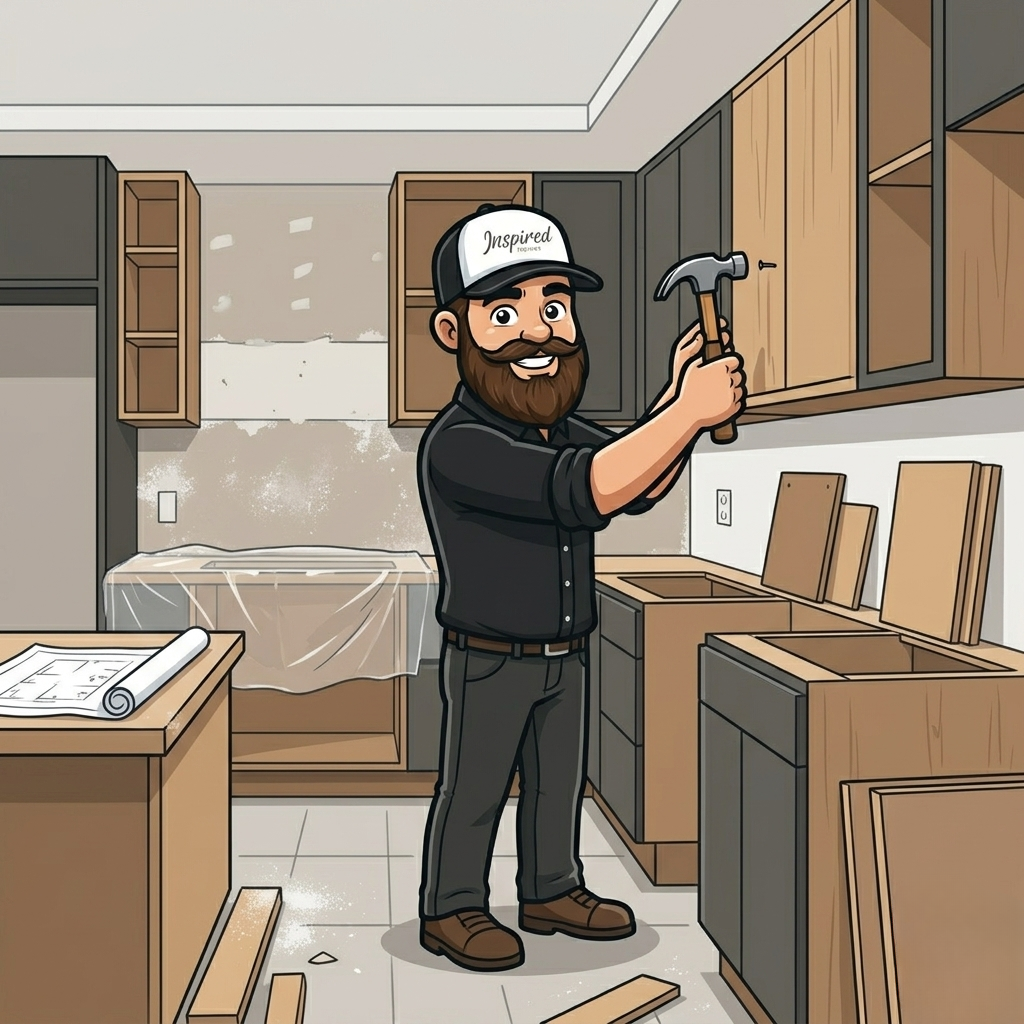
The kitchen is the heart of your home—and usually the most complex room to renovate. It’s where plumbing, electrical, cabinetry, countertops, flooring, lighting, and appliances all converge. Getting it right requires coordination, skilled tradespeople, and a clear plan.
If you’re considering a kitchen renovation in Kenmore, Lake Forest Park, Shoreline, Woodinville, or elsewhere in King County, here’s what to expect—from the first conversation to the moment you cook your first meal in your new space.
How Long Does a Kitchen Renovation Take?
A complete kitchen renovation typically takes three to four weeks of active work. That timeline assumes:
Materials and appliances are selected and ordered before demo begins.
The layout stays roughly the same (no major structural changes).
Permits are obtained in advance where required.
No significant hidden problems are discovered during demo.
More complex projects—moving walls, relocating plumbing, or custom carpentry—can extend the timeline to six weeks or more. Simpler refreshes that keep existing cabinets and layout might wrap up in two weeks.
The total calendar time also depends on lead times. Custom cabinets can take 4-8 weeks to arrive after ordering. Specialty countertops need fabrication time. Appliances may be backordered. A realistic project timeline starts with understanding these dependencies.
The Phases of a Kitchen Renovation
Kitchen renovations follow a logical sequence. Understanding each phase helps you know what’s happening and why.
Phase 1: Planning and Design (1-4 weeks before work begins)
This is where you make decisions: layout, cabinets, countertops, appliances, fixtures, flooring, lighting, paint colors. Everything should be selected and ordered before demo day. Changes made after work begins cause delays and cost more.
During this phase, we assess your existing kitchen, discuss your goals, and provide a detailed bid. If permits are needed (typically for electrical or plumbing changes), we handle that process.
Phase 2: Demolition (1-2 days)
Out with the old. Cabinets, countertops, flooring, fixtures—everything that’s being replaced comes out. This is also when we see what’s behind the walls and under the floor. In older King County homes, this sometimes reveals outdated wiring, plumbing that needs updating, or water damage that wasn’t visible before.
If we find issues, we stop and discuss them with you before proceeding. You’ll know exactly what we found, what it means, and what your options are.
Phase 3: Rough Work (3-5 days)
This phase covers everything that happens inside walls and under floors: electrical wiring, plumbing lines, gas lines (if applicable), and any structural modifications. If you’re adding an island with a sink, moving the refrigerator to a new location, or upgrading to a gas range, this is when that infrastructure gets installed.
Rough work requires inspections before walls are closed up. We coordinate this scheduling so there’s minimal delay.
Phase 4: Drywall and Prep (2-3 days)
Walls are patched or replaced, taped, mudded, and sanded. This prep work creates the clean canvas for everything that follows. It’s not glamorous, but it’s essential—rushing drywall work shows in the finished product.
Phase 5: Cabinets and Major Fixtures (3-5 days)
Cabinets are installed level and plumb—critical for doors that close properly and drawers that slide smoothly. This requires precision, especially in older homes where floors and walls may not be perfectly straight. Our finish carpenters have the experience to handle these challenges and make everything fit correctly.
Once cabinets are in, countertops are templated (if not already done) and ordered for fabrication.
Phase 6: Countertops, Backsplash, and Flooring (3-5 days)
Countertops are installed, which allows the sink and faucet to go in. Backsplash tile is set, grouted, and sealed. Flooring is installed (or refinished, if you’re keeping existing hardwood). The kitchen starts looking like a kitchen again.
Phase 7: Finishing Touches (2-3 days)
Appliances are installed and connected. Lighting fixtures go up. Hardware is mounted on cabinets. Trim and molding are completed. Paint touch-ups happen. Everything is cleaned, inspected, and walked through with you.
What Makes Kitchen Renovations Complex
Kitchens involve more trades and more coordination than almost any other room:
Plumbing for sinks, dishwashers, refrigerator water lines, and potentially gas lines.
Electrical for outlets, lighting, appliances, and potentially upgrading the panel to handle modern loads.
Carpentry for cabinets, trim, and any structural modifications.
Tile work for backsplashes and sometimes flooring.
Countertop fabrication and installation which often involves a separate specialist.
Painting for walls, ceilings, and potentially cabinet refinishing.
Sequencing matters. You can’t install countertops before cabinets. You can’t set a sink before countertops. You can’t connect a dishwasher before plumbing is roughed in. A missed step or a delayed material shipment can cascade through the entire schedule.
This is why kitchen renovations benefit from a single contractor managing the entire project—someone who understands how all the pieces fit together and can coordinate the sequence efficiently.
Design Considerations That Affect Your Project
Beyond choosing finishes you love, there are practical design decisions that affect timeline, budget, and results:
Matching the home’s character. A kitchen renovation should feel like it belongs in your home—not like it was dropped in from a different house. We recently rebuilt multiple kitchens as part of an apartment building renovation in Everett, and the key challenge was ensuring each kitchen matched the overall character of the building while being fully functional and modern. The same principle applies to single-family homes: your new kitchen should complement your home’s style, not clash with it.
Layout changes. Keeping your existing layout is the fastest and most cost-effective approach. Moving the sink, stove, or refrigerator requires relocating plumbing, electrical, or gas—adding time and cost. That doesn’t mean layout changes aren’t worth it, but they should be intentional decisions with clear benefits.
Cabinet quality. Cabinets range from budget-friendly stock options to semi-custom to fully custom. Higher-quality cabinets cost more but last longer and offer more design flexibility. They also have longer lead times—plan accordingly.
Countertop materials. Laminate is affordable but shows wear. Butcher block is warm but requires maintenance. Quartz is durable and low-maintenance. Granite offers natural beauty with some care requirements. Your choice affects both budget and daily use.
Appliance decisions. Standard-size appliances are easier to replace later. Built-in or cabinet-depth options look more integrated but limit future flexibility. If you’re upgrading to a gas range and don’t have gas currently, that’s a significant infrastructure addition.
Living Through a Kitchen Renovation
Let’s be honest: living without a kitchen for three to four weeks is inconvenient. But with some planning, it’s manageable.
Set up a temporary kitchen. A folding table, microwave, toaster oven, electric kettle, and mini-fridge in another room covers basic needs. Paper plates and simple meals get you through.
Plan for dust and noise. Demo and construction generate both. We contain dust as much as possible, but some will migrate. If you work from home, plan for interruptions during the noisiest phases.
Consider timing. Some homeowners schedule renovations during vacations or slow seasons. Others push through and enjoy their new kitchen sooner. There’s no wrong answer—just know what you’re signing up for.
The reality is that a few weeks of inconvenience leads to years of enjoying a kitchen that works for you. Most homeowners tell us the disruption was worth it once they’re cooking in their new space.
What a Good Kitchen Contractor Provides
Kitchen renovations require more than just skilled labor. Look for a contractor who offers:
Comprehensive project management. One point of contact who coordinates all the trades, manages the schedule, and keeps you informed. You shouldn’t have to juggle multiple subcontractors yourself.
Detailed bidding. A clear, written bid that breaks down costs by phase or category. You should know what you’re paying for cabinets, countertops, labor, and other line items—not just a single lump sum.
Honest communication. Regular updates on progress. Immediate communication if problems arise. No surprises at the end—if something changes the scope or cost, you hear about it when it happens, not when you get the final bill.
Skilled tradespeople. Especially finish carpenters who can handle cabinet installation, trim work, and the detailed craftsmanship that makes a kitchen look polished and professional. The difference between adequate and excellent cabinet installation is visible every time you open a door or drawer.
Ready to Start Planning Your Kitchen?
A kitchen renovation is a significant investment—in both money and time. Getting it right starts with a conversation about what you’re hoping to achieve and an honest assessment of what it will take to get there.
Inspired Homes serves homeowners throughout King and Snohomish Counties—Kenmore, Lake Forest Park, Shoreline, Woodinville, Mill Creek, Bothell, Everett, and surrounding areas. Our team of experienced finish carpenters handles complete kitchen renovations from demo to final walkthrough.
Call 425-576-2500 to schedule a consultation. We’ll discuss your vision, assess your space, and give you a realistic picture of timeline, cost, and what to expect. No pressure—just a straightforward conversation about your kitchen.
About Inspired Homes
From kitchen renovations to small repairs, Inspired Homes serves homeowners throughout King and Snohomish Counties with skilled craftsmanship and honest communication. Our team of experienced finish carpenters delivers quality work that transforms how you live in your home. Licensed, bonded, and insured. Lic# INSPIHL789J6
Related posts:
• How Long Does a Bathroom Renovation Actually Take?
• Why Every Home Project Gets a Custom Bid (And Why That Protects Your Budget)
• The Difference Between a Handyman and a Skilled Tradesperson
Comments are closed